

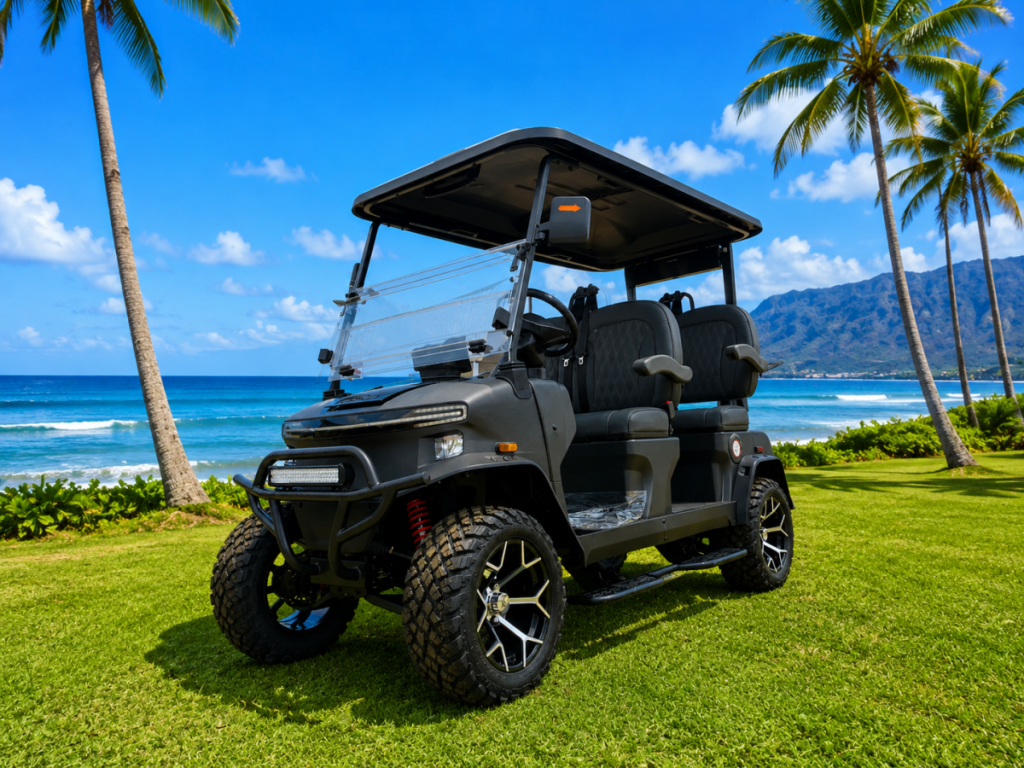
Owning a golf cart is convenient, but regular golf cart maintenance is essential for keeping it safe, comfortable, and ready to use. A simple routine helps identify worn tires, weak batteries, brake problems, loose hardware, and other issues before they become larger repairs.
The right maintenance routine depends on the cart’s power system, battery type, age, usage, and manufacturer. Electric carts need different care from gas-powered models, while flooded lead-acid batteries require different attention from lithium batteries. Manufacturer schedules should always take priority when they differ from general maintenance guidance.
Whether your cart is used for golf, neighborhood transportation, property maintenance, or recreation, a consistent maintenance schedule makes ownership easier. This guide covers the main tasks every owner should understand, along with a practical golf cart maintenance checklist.
Why Is Golf Cart Maintenance Important?
Golf carts have fewer components than many full-size vehicles, but that does not mean they are maintenance-free. Tires, brakes, steering components, batteries, charging systems, suspension parts, and electrical connections all experience wear.
Small problems are easier to address when they are noticed early. A tire with incorrect pressure, for example, affects handling and tread wear. A battery with poor charging habits can lose useful capacity. Brakes that feel different from normal deserve attention rather than being ignored.
Routine inspections also give owners a better understanding of how their cart behaves. Changes in acceleration, braking, steering, charging time, noise, or range often provide an early indication that something needs to be checked.
Golf Cart Maintenance Checklist at a Glance
A good maintenance plan does not require every task to be completed on the same day. Breaking maintenance into simple intervals makes it easier to stay consistent.
| Maintenance Task | Suggested Frequency | Electric | Gas |
| Visual inspection | Before regular use | Yes | Yes |
| Tire pressure and condition | Monthly or more with heavy use | Yes | Yes |
| Battery inspection | Monthly | Yes | No |
| Battery charging check | After use | Yes | No |
| Engine oil check | Regularly | No | Yes |
| Brake inspection | Seasonally or per manual | Yes | Yes |
| Steering and suspension check | Seasonally | Yes | Yes |
| Lights and horn | Regularly | Yes | Yes |
| Professional inspection | Based on manufacturer schedule | Yes | Yes |
These intervals are general guidance. Actual service requirements vary by model and operating conditions, so check the owner’s manual for the exact schedule. Yamaha, for example, provides separate daily and monthly maintenance guidance and directs owners to the applicable owner’s manual for periodic inspection details.
Start With a Basic Visual Inspection
A quick walk-around is one of the simplest forms of golf cart maintenance. Look for visible damage, loose components, fluid leaks, damaged cables, worn tires, and anything that looks different from the previous inspection.
Check the seats, roof, windshield, body panels, wheels, and frame. If the cart has mirrors, lights, turn signals, or a horn, verify that these components are secure and working.
Pay attention to new noises as well. Grinding, clicking, squealing, or unusual vibration deserves investigation. A sudden change in how the cart drives is another reason to stop and inspect it before continued use.
If you find a brake, steering, wheel, tire, fuel, or battery problem that affects safe operation, do not continue driving the cart until the issue has been properly assessed.
Battery Maintenance for Electric Golf Carts
Battery care is one of the most important parts of maintaining an electric golf cart. However, the correct routine depends heavily on the battery chemistry.
Flooded Lead-Acid Batteries
Flooded lead-acid batteries require periodic water-level checks. Use distilled water and follow the battery manufacturer’s instructions for the correct level and timing.
Water should not be added casually before charging. Charging changes the electrolyte level, so battery-specific instructions should be followed closely. Trojan’s battery guidance, for example, specifies checking and filling at the appropriate point in the charging cycle.
Inspect battery terminals and cables for corrosion, looseness, or visible damage. Corroded connections can interfere with electrical performance and should be handled carefully.
Lithium Batteries
Lithium batteries do not require the same watering routine as flooded lead-acid batteries. Owners should instead follow the battery manufacturer’s charging and storage recommendations.
Keep the battery compartment clean and free from debris. If the cart experiences unexpected shutdowns, charging problems, or unusual battery behavior, have the system inspected rather than attempting repairs without the required knowledge.
Follow Good Charging Habits
Charging habits have a major effect on electric cart ownership. After using the cart, follow the charging procedure specified for the vehicle and battery system.
Use the correct charger for the battery voltage and chemistry. A charger that fits physically is not necessarily compatible with every battery system.
Do not ignore charging problems. Slow charging, repeated charger shutdowns, unusual heat, damaged cables, burning smells, or fault indicators deserve attention.
If a battery or charging component becomes excessively hot, swollen, cracked, or damaged, stop using the system and seek qualified assistance. High-current electrical systems can present serious hazards.
Check Tires and Wheels Regularly
Tires influence traction, handling, ride quality, and braking. Include them in your regular golf cart maintenance checklist.
Check tire pressure when the tires are cold and use the pressure specified for your exact cart and tire combination. Do not simply use the maximum pressure printed on the tire sidewall as the vehicle’s recommended operating pressure. Manufacturer specifications should take priority.
Inspect the tread for uneven wear, cuts, cracks, punctures, or embedded objects. Uneven wear could indicate an alignment, suspension, or inflation problem.
The wheels also deserve attention. Look for visible damage and check that wheel hardware remains properly secured according to the manufacturer’s specifications.
Inspect the Brakes
Brake maintenance should never be treated as an optional task. The cart should stop smoothly and predictably, and the parking brake should hold the vehicle when engaged.
Pay attention to changes in pedal feel, stopping distance, pulling to one side, grinding, squealing, or unusual vibration. These symptoms could indicate wear or another problem requiring inspection.
Some golf carts use mechanical drum brakes, while others have different braking configurations. Because systems vary, brake adjustment and repair procedures should follow the manufacturer’s instructions.
If braking performance changes significantly, stop using the cart until the problem is assessed.
Keep Steering and Suspension in Good Condition
Steering and suspension components affect control, comfort, and stability.
Turn the steering wheel and pay attention to unusual looseness, resistance, vibration, or noises. During a visual inspection, look for damaged suspension components, worn bushings, or anything that appears loose.
A cart that pulls to one side or develops excessive steering play should receive attention. Do not assume that unusual steering behavior is simply part of the cart’s age.
Lift kits, larger tires, and other modifications can also change how a cart handles. Customized carts deserve maintenance checks based on their actual components rather than the original stock configuration.
Maintenance for Gas-Powered Golf Carts
Gas carts have several additional maintenance requirements because they use an internal combustion engine.
Check the engine oil according to the manufacturer’s schedule and use the specified oil grade. Oil changes should follow the recommended time or operating-hour interval.
Air filters also need inspection and replacement when required. A dirty filter restricts airflow and affects engine performance.
Other components that may require periodic attention include spark plugs, fuel filters, belts, fuel lines, and cooling areas. The exact requirements vary by model, so the owner’s manual should guide the service schedule.
Watch for fuel leaks, unusual exhaust, difficult starting, rough idling, or new engine noises. These symptoms should not be ignored.
Inspect Lights, Horns, and Safety Equipment
If your golf cart has headlights, brake lights, turn signals, hazard lights, or a horn, test them regularly.
This is particularly important for carts equipped for road use. Safety equipment needs to remain functional, and requirements depend on the vehicle and the roads where it operates.
Also inspect seat belts where fitted. Check that mounting points remain secure and that belts latch correctly.
Keeping these components in working order is a simple step that belongs on every owner’s golf cart maintenance checklist.
Clean the Cart Properly
Cleaning is more than a cosmetic task. Dirt, mud, moisture, and debris can accumulate around electrical connections, battery compartments, suspension components, and the underside of the cart.
Wash the exterior using products appropriate for the cart’s materials. Avoid directing high-pressure water into electrical components or other areas that should remain protected.
Seats and dashboards should also receive appropriate care. Keeping vinyl and plastic surfaces clean helps maintain their appearance and makes it easier to notice cracks, damage, or other changes.
After cleaning, allow areas around electrical components and batteries to dry properly before use.
Create a Seasonal Maintenance Routine
Changes in usage and weather can affect how frequently a golf cart needs attention.
Before a period of heavy use, inspect the tires, brakes, steering, suspension, battery system, lights, and charging equipment. After extended storage, perform another inspection before putting the cart back into regular service.
For electric carts, storage procedures depend on the battery type. Lead-acid and lithium batteries have different requirements, so follow the battery manufacturer’s recommendations.
A written maintenance log is useful for owners who want to track inspections, battery work, tire replacements, brake service, and other repairs. It also provides a useful history when diagnosing recurring problems.
When Should You Call a Professional?
Many basic checks are suitable for owners, but some repairs require specialist knowledge and equipment.
Electrical faults, battery-system problems, brake repairs, steering issues, engine repairs, and drivetrain problems should receive appropriate professional attention when they are beyond your experience.
Warning signs include burning smells, smoke, damaged high-current cables, battery swelling or leakage, brake failure, serious steering problems, fuel leaks, or unusual drivetrain grinding.
A maintenance schedule is designed to prevent problems, not encourage owners to perform repairs they are not equipped to handle.
Common Golf Cart Maintenance Mistakes
Skipping inspections is one of the easiest ways for small problems to become larger ones. Another mistake is applying the same maintenance routine to every cart.
For example, flooded lead-acid batteries need water checks, while lithium batteries do not. Gas carts require engine-related service that does not apply to electric models.
Using incorrect tire pressure, ignoring unusual brake behavior, using an incompatible charger, and overlooking loose connections are also avoidable mistakes.
The safest approach is simple: know your cart, follow its manual, and record important maintenance work.
A Simple Maintenance Routine for Owners
You do not need to spend hours maintaining a golf cart every week. Consistency matters more than complexity.
Before regular use, look over the cart and check for obvious problems. On a regular schedule, inspect tires, battery systems, brakes, steering, suspension, lights, and other important components.
For gas models, add engine oil, filters, spark plugs, and fuel-system checks to the routine as specified by the manufacturer.
For electric models, pay particular attention to charging habits, battery condition, terminals, cables, and the differences between lead-acid and lithium systems.
Following a structured routine helps owners identify changes before they develop into expensive or disruptive failures.
Frequently Asked Questions
1. How often should a golf cart be serviced?
2. What should be included in a golf cart maintenance checklist?
3. How do I maintain golf cart batteries?
4. How often should I check golf cart tire pressure?
5. What are signs that a golf cart needs maintenance?
Final Thoughts
Regular golf cart maintenance keeps important systems in better condition and helps owners identify problems before they become larger concerns. The most important areas include batteries, charging systems, tires, brakes, steering, suspension, lights, and powertrain components.
The right maintenance schedule depends on the specific cart. Electric and gas models have different requirements, while lead-acid and lithium batteries need different care. Following the owner’s manual and keeping a simple service record provides a practical foundation for long-term ownership.
For help with golf cart models, parts, maintenance, or service options, contact 808 Golf Carts and discuss your cart’s needs with the team.