


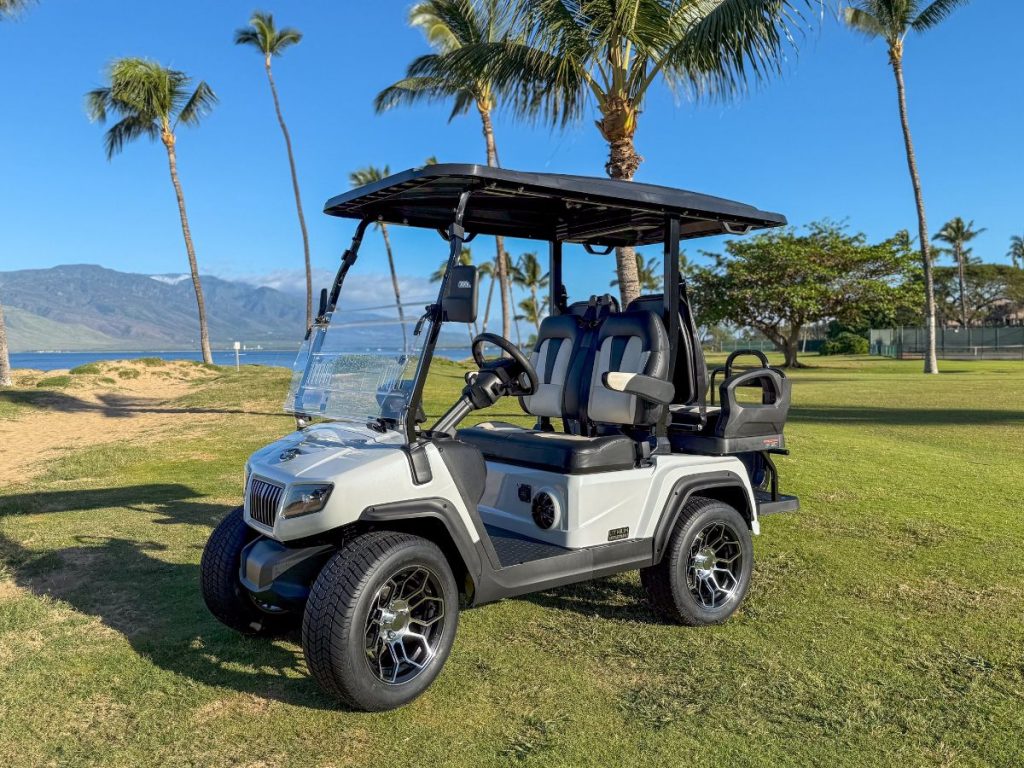
Golf carts are simpler than full-size vehicles in some ways, but that does not make them maintenance-free.
Tires still wear. Brakes still need attention. Electrical connections can corrode. Batteries can lose performance. Suspension components can loosen or develop wear over time.
The biggest problems often begin with small maintenance mistakes that are easy to avoid.
For owners looking for practical golf cart maintenance tips, the goal is not to perform complicated repairs at home. It is to build a routine that helps you notice problems early, follow the correct maintenance requirements for your cart and avoid habits that create unnecessary wear.
The right routine also depends on the vehicle. Lithium-powered carts, flooded lead-acid carts and gas-powered carts do not all require the same care.
Here are 10 common maintenance mistakes that can shorten a golf cart’s useful life or lead to avoidable repair costs.
Why Regular Golf Cart Care Matters?
A golf cart contains several systems that experience normal wear every time it is driven.
These include:
Battery and charging components
Tires and wheels
Brakes
Steering
Suspension
Electrical wiring
Lights and safety equipment
Hardware and fasteners
Gas-powered carts also add engine oil, filters, spark plugs and fuel-system components to the maintenance list.
Regular inspections help owners notice changes before they become larger problems.
A tire wearing unevenly, a brake pedal that suddenly feels different or a charging system that behaves unusually can all be early signs that something needs attention.
808 Golf Carts’ complete golf cart maintenance guide also recommends building maintenance around the manufacturer’s service schedule rather than applying one generic routine to every cart.
Mistake #1: Treating Every Golf Cart the Same
One of the most common maintenance mistakes is assuming every golf cart needs identical care.
They do not.
An electric cart with lithium batteries has different maintenance requirements from one with flooded lead-acid batteries.
A gas-powered cart has another set of requirements altogether.
For example:
Flooded lead-acid batteries may require water-level checks.
Lithium batteries should not be treated like flooded batteries.
Gas carts require engine-related servicing.
Different braking systems may have different inspection and adjustment procedures.
Different manufacturers also use different service intervals.
The safest golf cart care strategy is to start with the owner’s manual.
Use general maintenance guidance as a reminder, but follow the manufacturer’s schedule whenever it differs.
Mistake #2: Ignoring Battery Charging Habits
For electric golf carts, the battery system is one of the most important parts of the vehicle.
Poor charging habits can affect range, reliability and battery longevity.
One mistake is repeatedly allowing the battery to reach an extremely low state of charge before thinking about charging.
Another is assuming that every battery should be left on a charger indefinitely.
The correct charging routine depends on:
Battery chemistry
Charger type
Battery-management system
Manufacturer recommendations
Usage pattern
Storage conditions
Owners should use a charger designed for the battery system installed in the cart.
Do not substitute an incompatible charger simply because the connector appears to fit.
808 Golf Carts’ Hawaii maintenance guidance also recommends consistent charging rather than waiting for complete depletion, particularly for modern lithium systems.
Mistake #3: Using the Wrong Battery Maintenance Routine
Battery chemistry matters.
A common mistake is applying traditional lead-acid maintenance advice to a lithium-powered cart.
Flooded lead-acid batteries may require owners to inspect electrolyte levels and maintain proper water levels according to the battery manufacturer’s instructions.
Lithium batteries do not require that procedure.
Likewise, owners should not open or attempt to service sealed lithium battery packs.
Pay attention to:
Battery connections
Charging behaviour
Visible damage
Unusual heat
Warning indicators
Reduced driving range
Damaged battery cables
If the battery case is damaged, swollen or leaking, stop using the cart and have the system inspected.
Battery repairs involving high-current electrical systems should be handled by someone qualified to perform the work.
Mistake #4: Forgetting About Tire Pressure
Tire pressure is easy to overlook because a golf cart may still move normally even when a tire is not properly inflated.
However, incorrect pressure can affect:
Handling
Tire wear
Ride quality
Braking behaviour
Electric driving range
Underinflated tires can create excess rolling resistance and wear.
Overinflation can reduce the amount of tire contacting the road and may affect ride comfort and traction.
Check the recommended pressure for the specific tire installed on your cart rather than relying on a generic number.
Also inspect the tread and sidewalls.
Look for:
Uneven wear
Cuts
Cracks
Punctures
Embedded objects
Bulges
Uneven tire wear can sometimes point to alignment, suspension or inflation problems rather than just worn rubber.
Mistake #5: Ignoring Changes in Braking
Brakes should not be maintained only when they stop working completely.
Changes in braking behaviour deserve attention immediately.
Common warning signs include:
Longer stopping distance
Grinding
Squealing
Vibration
Pulling to one side
A different pedal feel
Parking brake problems
Owners sometimes get used to gradual changes and assume they are simply part of an ageing cart.
That can delay necessary inspection.
Brake systems also vary between carts, so adjustment procedures should follow manufacturer specifications.
If braking performance changes significantly, stop driving until the problem is properly assessed.
The 808 Golf Carts maintenance checklist includes brake inspection as one of the core recurring maintenance tasks.
Mistake #6: Overlooking Steering and Suspension Problems
Loose steering, unusual vibration or new suspension noises should not be ignored.
These symptoms may be caused by:
Worn bushings
Loose hardware
Steering components
Suspension wear
Wheel or tire problems
Alignment issues
A cart that begins pulling to one side also deserves inspection.
Owners of lifted carts should pay particular attention because suspension modifications and larger tires may change the stresses placed on certain components.
Aftermarket modifications can also mean that the original factory maintenance guidance no longer covers every component installed on the vehicle.
Any customised cart should be maintained according to its actual configuration.
Mistake #7: Letting Salt, Moisture and Dirt Build Up
This is particularly important for Hawaii owners.
Salt air, humidity, rain and coastal driving can accelerate corrosion on exposed metal and electrical connections.
808 Golf Carts’ climate-specific maintenance advice recommends regular rinsing after coastal exposure, drying the cart properly and checking fasteners, brackets and electrical connections for corrosion.
Do not wait until obvious rust appears.
Pay attention to:
Frame components
Undercarriage
Battery terminals
Electrical connectors
Bolts
Brackets
Wheel hardware
Paint chips
After beach or coastal use, removing salt and sand before they remain on the cart for extended periods is a simple form of preventative maintenance.
Cleaning is not just cosmetic.
It also makes cracks, corrosion, leaks and loose components easier to notice.
Mistake #8: Using High-Pressure Water Around Electrical Components
Washing the cart regularly is useful.
Blasting electrical areas with high-pressure water is not.
Chargers, connectors, switches, battery compartments and electronic components should be protected from unnecessary water intrusion.
When cleaning:
Use appropriate cleaning products.
Avoid forcing water into electrical connections.
Clean battery areas carefully.
Dry the vehicle properly afterward.
Check that water is not pooling around floor areas or components.
This is especially important for carts exposed to regular rain or coastal conditions.
A clean cart is easier to inspect, but aggressive washing techniques can create problems that did not exist beforehand.
Mistake #9: Ignoring Small Changes Until the Cart Breaks Down
One of the most expensive maintenance habits is waiting until the golf cart stops working.
Most owners know how their cart normally feels.
That makes unusual behaviour useful information.
Do not ignore:
Reduced range
Slower acceleration
Grinding sounds
Clicking
New vibration
Changes in steering
Longer charging times
Burning smells
Brake changes
Warning lights or display messages
Not every unusual sound indicates a major failure.
However, early inspection may identify a loose connection, worn tire, brake issue or other problem before it becomes more complicated.
A good golf cart maintenance checklist includes paying attention to how the vehicle drives, not just looking at a calendar.
Mistake #10: Attempting Repairs Beyond Your Experience
Basic owner maintenance is useful.
Improvised repairs involving braking systems, steering, high-current electrical components or damaged battery packs can create safety problems.
Know the difference between inspection and repair.
Owners can usually perform tasks such as:
Checking tires
Looking for loose hardware
Inspecting visible battery connections
Cleaning the cart
Testing lights
Recording changes in performance
More complex golf cart repair may require specialist tools, training and manufacturer information.
Professional attention is particularly important when you notice:
Burning smells
Smoke
Battery swelling
Fuel leaks
Serious steering problems
Brake failure
Damaged electrical cables
Structural damage
Persistent electrical faults
808 Golf Carts provides parts and service support from its Maui operation, and owners can use the contact and service page when a problem requires professional assessment.
A Simple Golf Cart Maintenance Schedule
Maintenance becomes easier when tasks are divided into simple intervals.
| Maintenance Task | Suggested General Frequency |
|---|---|
| Quick visual inspection | Before regular use |
| Tire pressure and condition | Monthly or more often with heavy use |
| Battery inspection | Monthly |
| Charging-system check | Regularly |
| Lights and horn | Regularly |
| Brakes | Seasonally or according to manual |
| Steering and suspension | Seasonally or according to manual |
| Professional service | According to manufacturer schedule |
These are general reminders rather than universal service requirements.
Always follow the schedule for your specific vehicle.
A cart used every day in coastal Hawaii may also require more frequent inspection than one stored indoors and driven occasionally.
Golf Cart Maintenance Tips for Hawaii Owners
Hawaii’s climate adds several maintenance considerations that owners in drier environments may face less frequently.
Rinse After Coastal Exposure
Fresh water can help remove salt from exposed surfaces after beach or coastal use.
Dry the Cart Properly
Do not allow water to remain around metal joints, fasteners or electrical components.
Watch for Corrosion
Inspect battery terminals, brackets and hardware regularly.
Protect the Cart From Strong Sun
Long-term UV exposure can affect seats, plastics, tires and other exterior components.
Covered storage can help reduce exposure when the cart is not being used.
Inspect Tires More Frequently
Heat, sun exposure and varied road surfaces can all contribute to tire wear.
These climate-specific steps are covered in more detail in the Hawaii golf cart maintenance guide.
Should You Keep a Maintenance Log?
Yes.
A simple maintenance record can help owners remember:
Battery work
Tire changes
Brake inspections
Repairs
Service dates
Parts replacements
Recurring problems
It does not need to be complicated.
A notebook, spreadsheet or digital note is enough.
Maintenance records can also be useful when selling the cart because they provide a clearer history of how the vehicle has been cared for.
When Should a Golf Cart Be Professionally Inspected?
The owner’s manual should guide routine service intervals, but some symptoms justify earlier attention.
Consider professional inspection when:
Range falls significantly without an obvious reason.
The cart develops repeated electrical faults.
Braking changes.
Steering becomes loose or unpredictable.
Suspension develops persistent noise.
Structural rust appears.
The vehicle suffers impact damage.
The cart produces unusual drivetrain noises.
Owners considering another vehicle while evaluating repair costs can also review the current golf cart inventory for available options.
Conclusion: Good Maintenance Is Mostly About Consistency
The most useful golf cart maintenance tips are often the simplest.
Know which battery system your cart uses.
Charge it correctly.
Check your tires.
Pay attention to brakes and steering.
Keep the cart clean.
Watch for corrosion.
Do not ignore new noises or changes in performance.
And do not attempt repairs that are beyond your experience.
The biggest maintenance mistake is often waiting until something fails completely.
A short visual inspection and consistent service routine can help owners notice problems earlier and keep the cart easier to own over time.
808 Golf Carts provides sales, parts and service support for golf cart owners in Hawaii, including maintenance guidance designed around local coastal conditions.