

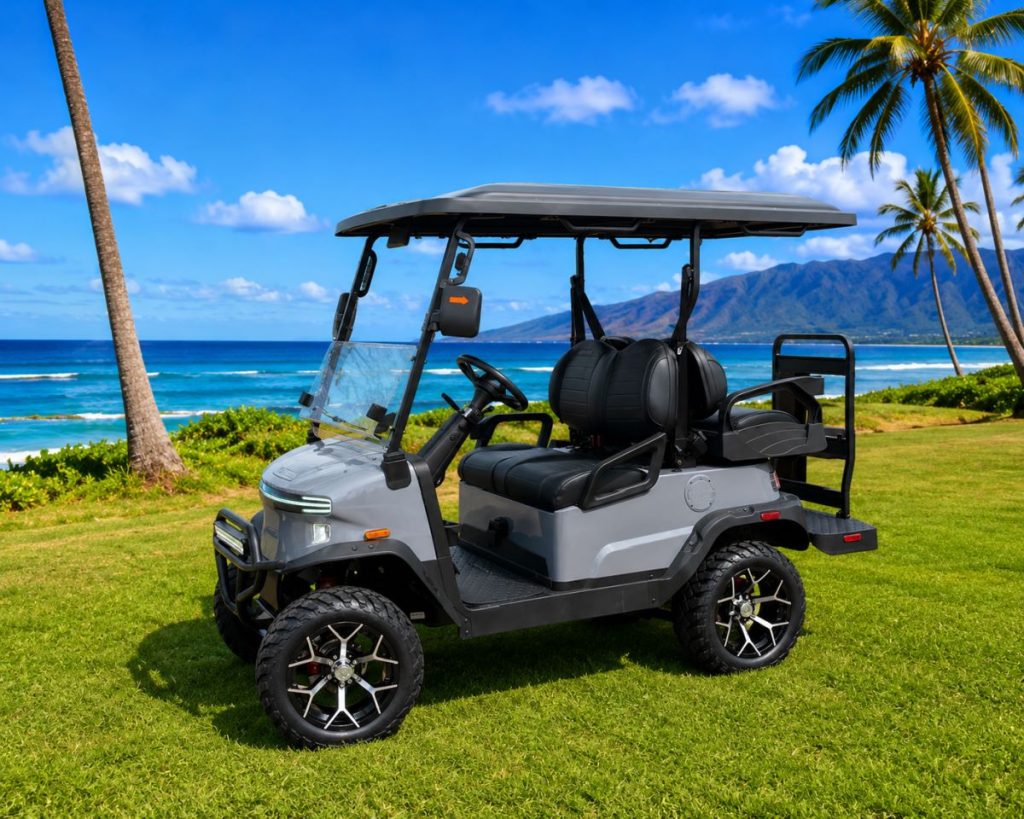
Buying a golf cart is a significant decision, especially when choosing a newer brand such as Denago. The company has attracted attention with modern electric carts, lithium battery systems, contemporary styling, and features that appeal to buyers looking for more equipment at a competitive price.
At the same time, searches for Denago golf cart problems raise important questions about long-term reliability, parts availability, electronics, dealer support, and ownership costs.
The right approach is not to assume every Denago cart has problems. Owner experiences are mixed, and many drivers report positive experiences. However, there are recurring concerns worth understanding before purchasing. Denago is also a relatively young golf cart brand, so its long-term track record is not as established as Club Car, E-Z-GO, or Yamaha.
Is Denago a Reliable Golf Cart Brand?
Denago has built its reputation around lithium-powered electric golf carts with modern features and relatively accessible pricing. Reviews of current models generally highlight their smooth operation, technology, styling, and included equipment.
Reliability is harder to judge because the brand has a shorter ownership history than established manufacturers. That means there is less evidence showing how today’s carts perform after five, eight, or ten years of regular use.
Recent reviews describe the drivetrain and lithium battery platform positively, while electronics, parts availability, and dealer support receive more mixed feedback.
This distinction matters. A golf cart might perform very well during its first few years while still having an uncertain long-term repair and resale history.
What Are the Most Common Denago Golf Cart Problems?
There is no reliable fleet-wide failure percentage that proves a particular Denago component fails at a specific rate. Instead, available owner reports and reviews point toward several areas buyers should inspect carefully.
1. Electrical and Electronic Issues
Modern Denago carts include digital displays, controls, lighting, and other electronic equipment. These features add convenience, but they also introduce more components that could require troubleshooting.
Some owner reports mention problems involving displays, direction selectors, wiring connections, and other electronic components. A 2026 owner review also reported a card-reader failure on a newer Denago XXL.
These reports do not establish that electronic failures are widespread. They do show why buyers should test every electronic function before accepting delivery.
Check the display, lighting, horn, direction selector, charging system, USB or accessory connections, and other installed equipment during the inspection.
2. Parts Availability
Parts availability is one of the more significant concerns raised in current Denago discussions.
Established golf cart manufacturers have decades of parts distribution behind them. Newer brands do not necessarily have the same depth of inventory across every market.
Several owner reports describe waiting for replacement parts, including a report involving an axle that left a cart unusable while the dealer waited for the part. Another complaint submitted to the Better Business Bureau described a Denago cart remaining at a dealership for months while replacement parts were reportedly being awaited.
That does not mean every repair takes months. Parts availability varies by component, dealer, location, and supply conditions. Still, it is an important question to ask before purchasing.
3. Dealer and Service Support
For a newer golf cart brand, the dealership is an important part of the ownership experience.
A dealer that stocks common parts and has technicians familiar with the model is positioned to resolve issues more efficiently than a dealer that primarily handles sales.
Current reviews repeatedly identify dealer support as one of the biggest variables in the Denago ownership experience.
Before buying, ask who handles warranty repairs, where replacement parts come from, how long common parts usually take to arrive, and who provides service after the sale.
4. Suspension, Squeaks, and Fit-and-Finish Concerns
Some owner discussions mention squeaking or noise from newer carts. A 2026 forum discussion involving a Denago Rover described a persistent squeak, while another owner discussion suggested checking suspension components and other mechanical areas when investigating noises.
A noise does not automatically indicate a serious mechanical defect. Loose hardware, suspension joints, wheel components, or other parts might produce similar symptoms.
A thorough inspection and test drive are therefore important. Drive over different surfaces and listen for rattles, squeaks, vibration, or unusual movement.
5. Limited Long-Term Reliability Data
This is perhaps the most important consideration for buyers comparing Denago with established golf cart manufacturers.
A newer brand simply has less historical data.
Current reviews describe Denago as a newer entrant with generally positive performance feedback but limited long-term durability evidence.
This does not mean the carts will have poor durability. It means buyers have less historical information available to predict how a particular model will perform after many years of ownership.
Denago Golf Cart Problems vs. Positive Owner Feedback
Looking only at complaints creates an incomplete picture. Some owners report good experiences with their Denago carts, including positive impressions of ride quality, lithium battery performance, styling, and included features.
A 2026 review described positive feedback surrounding the battery and drivetrain, while other owner reviews praised the smooth ride and overall value.
The balanced conclusion is that Denago ownership does not fit a simple “good” or “bad” label.
| Area | What Buyers Should Know |
| Lithium battery | Low-maintenance platform with positive owner feedback |
| Drivetrain | Generally positive reports, but long-term data is limited |
| Electronics | More reported concerns than core drivetrain components |
| Parts | Availability deserves careful consideration |
| Dealer support | Highly dependent on the dealership |
| Ride quality | Generally positive feedback |
| Long-term durability | Less proven than established brands |
| Resale value | Long-term market history is still developing |
Does a Denago Golf Cart Have Good Battery Reliability?
Battery technology is one of Denago’s major selling points. Current models use lithium battery systems, which eliminate many of the routine maintenance requirements associated with flooded lead-acid batteries.
Lithium systems also use battery management electronics to monitor battery operation.
However, battery performance still depends on charging practices, storage conditions, usage, temperature, and the condition of the charging system.
Buyers should ask about the exact battery chemistry, capacity, warranty terms, charging equipment, replacement cost, and expected service procedure before purchasing.
Do not evaluate battery quality based only on advertised driving range. Actual range depends on terrain, passenger load, speed, temperature, driving habits, and other factors.
How Long Do Denago Golf Carts Last?
There is no dependable lifespan figure that applies to every Denago golf cart.
The useful way to think about lifespan is through the individual components. Battery condition, electrical components, suspension, brakes, tires, charger, drivetrain, and chassis all contribute to the cart’s usable life.
Maintenance also matters. A cart that receives regular inspections and appropriate servicing has a better foundation for long-term ownership than one that is neglected.
Because Denago has a shorter history than legacy manufacturers, buyers should place more emphasis on the specific model, warranty documentation, service availability, and dealer reputation rather than relying on a single estimated lifespan number.
What Should You Check Before Buying a Denago Golf Cart?
A careful inspection helps identify problems before money changes hands.
Start with the basics. Check the cart’s body panels, frame, wheels, tires, seats, windshield, roof, and hardware. Then test the mechanical and electrical systems.
Pay particular attention to:
- Battery charge level and charging operation
- Forward and reverse operation
- Braking performance
- Steering response
- Suspension noise
- Tire condition and alignment
- Lights and horn
- Display and electronic controls
- Charger operation
- Unusual noises or vibration
Ask the dealer to provide the written warranty, owner’s documentation, maintenance information, and details about local service.
It is also worth asking which replacement parts are kept locally and which parts typically require ordering.
Is Buying a Denago Golf Cart Worth It?
For some buyers, Denago’s combination of lithium technology, modern design, features, and pricing makes the brand attractive.
For others, the biggest priority is a long-established parts network and decades of resale history. In that situation, an established manufacturer might offer greater familiarity and a deeper ownership record.
The important point is that Denago golf cart problems should be evaluated in context. Reports of electronic issues, parts delays, noises, and inconsistent service experiences deserve attention, but they do not prove that every Denago cart will experience those problems.
The dealer you purchase from also matters considerably. A strong local service relationship could make a significant difference if a warranty issue or parts-related repair arises.
Questions to Ask a Denago Dealer
Before signing a purchase agreement, ask direct questions rather than relying only on advertising material.
Ask:
- Who performs warranty repairs?
- Which replacement parts are stocked locally?
- What happens if a part is backordered?
- What exactly does the written warranty cover?
- Is labor included with warranty repairs?
- What maintenance does the dealer recommend?
- What happens if the dealership stops selling the brand?
- What documentation comes with the cart?
Get important answers in writing. Warranty coverage and terms depend on the specific product and applicable warranty documentation, so buyers should review the actual paperwork supplied with their cart.
Final Verdict on Denago Golf Cart Problems
Denago golf carts offer a modern alternative to traditional golf cart brands, particularly for buyers interested in lithium power, contemporary features, and newer vehicle designs.
The main concerns are less about one universally documented mechanical defect and more about the realities of buying from a newer manufacturer. Parts availability, electronics, dealer support, long-term durability data, and resale history deserve additional attention.
Owner feedback is mixed. Some drivers report smooth operation and strong satisfaction, while others describe parts delays or individual component problems.
That makes a thorough pre-purchase inspection and careful dealer selection especially important.
If you are comparing Denago with other golf cart brands, evaluate the complete ownership picture rather than focusing only on the purchase price. Consider service access, replacement parts, warranty coverage, battery technology, maintenance requirements, and expected length of ownership.
A well-supported cart from the right dealer may provide a very different ownership experience from a similar cart purchased without considering after-sale support.
FAQs About Denago Golf Cart Problems
1. Are Denago golf carts reliable?
2. What is the most common problem with Denago golf carts?
3. Do Denago golf carts have battery problems?
4. Are Denago golf cart parts hard to get?
5. Should I buy a Denago golf cart?
Need help choosing the right golf cart for your needs? Contact 808 Golf Carts to discuss available options, features, and ownership considerations.