


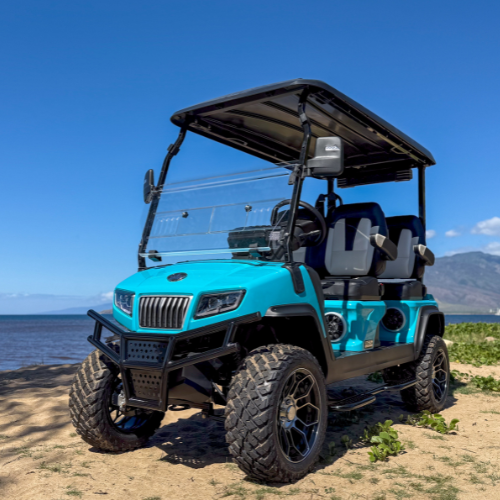
Golf carts are commonly used across Hawaii for short-distance transportation within resorts, residential communities, and private properties. In some cases, a golf cart can also be registered for limited street use if it meets specific legal and safety requirements. For owners of a two person golf cart or golf cart 2 seater, understanding the registration process is essential before operating on public roads.
This guide provides a clear, step-by-step explanation of how to register a street-legal golf cart in Hawaii. It covers vehicle classification, safety requirements, documentation, costs, and ongoing responsibilities. The information is designed to help owners navigate the process accurately and responsibly.
What Makes a Golf Cart Street-Legal in Hawaii?
In Hawaii, golf carts are not automatically permitted on public roads. To become street-legal, a cart must qualify as a Low-Speed Vehicle (LSV) or Neighborhood Electric Vehicle (NEV) under state and federal definitions.
Basic Legal Criteria
A golf cart must:
- Be capable of maintaining speeds between 20 and 25 mph
- Operate only on roads with posted speed limits of 35 mph or less
- Meet all required safety equipment standards
- Be registered and insured through the appropriate county DMV
Carts that do not meet these criteria are generally limited to private property or designated areas.
Why Two-Seater Golf Carts Are Commonly Registered
Smaller carts are typically easier to bring into compliance.
Two Person Golf Cart Advantages
A two person golf cart often:
- Has a lighter frame and lower weight
- Requires fewer seat belt installations
- Is easier to inspect and certify
Because of these factors, a golf cart 2 seater is commonly chosen for residential street-legal use where permitted.
Step 1: Confirm Vehicle Eligibility
Before beginning registration, confirm that the golf cart can qualify as a street-legal vehicle.
Eligibility Checklist
Verify that the cart:
- Has four wheels
- Can reach at least 20 mph
- Has a manufacturer certificate or documentation
- Is structurally capable of supporting required safety equipment
If the cart cannot meet speed or equipment standards, it will not qualify for registration.
Step 2: Install Required Safety Equipment
Street-legal golf carts must meet federal safety standards similar to other low-speed vehicles.
Mandatory Safety Features
The following equipment is required:
- Headlights
- Tail lights
- Brake lights
- Turn signals
- Reflectors
- Windshield
- Rearview mirrors
- Horn
- Parking brake
- Seat belts for each seating position
- Vehicle Identification Number (VIN)
Each item must be functional at the time of inspection.
Seat Belt Requirements for Two-Seater Carts
For a golf cart 2 seater, seat belts must be:
- Properly mounted
- Accessible to both occupants
- Designed for vehicle use rather than recreational restraint
Improper or missing seat belts are a common reason for inspection failure.
Step 3: Obtain or Verify a VIN
All street-legal vehicles in Hawaii must have a VIN.
VIN Assignment Process
If the golf cart does not already have a VIN:
- Apply for a VIN through the local DMV
- Schedule an inspection for VIN assignment
- Affix the VIN plate as instructed
The VIN is required for registration, insurance, and future renewals.
Step 4: Schedule a Vehicle Inspection
A formal inspection ensures the golf cart meets all legal requirements.
What Inspectors Check
During inspection, officials typically verify:
- Safety equipment functionality
- Speed capability
- VIN placement and documentation
- Structural integrity
- Tire condition and road suitability
Any deficiencies must be corrected before proceeding.
Step 5: Prepare Required Documentation
Documentation is a critical part of the registration process.
Commonly Required Documents
You may need:
- Proof of ownership or bill of sale
- Manufacturer documentation
- VIN inspection form
- Safety inspection certificate
- Valid photo identification
- Proof of insurance
Requirements may vary slightly by county.
Step 6: Register the Golf Cart With the DMV
Once inspections and documentation are complete, registration can proceed.
Registration Process Overview
- Submit completed forms
- Pay applicable fees
- Receive license plates
- Obtain registration certificate
The golf cart is not legal for road use until registration is finalized.
Registration Costs and Fees
Costs can vary depending on the cart and county.
Typical Cost Breakdown
| Cost Category | Description |
| Safety equipment upgrades | Depends on cart configuration |
| VIN assignment | One-time DMV fee |
| Registration and plates | Standard LSV registration |
| Insurance | Based on coverage and provider |
| Annual renewal | Required to maintain legal status |
These costs are separate from the purchase price of the golf cart.
Road Usage Rules After Registration
Even after registration, street-legal golf carts face restrictions.
Permitted Roadways
Street-legal carts may operate on:
- Roads with speed limits of 35 mph or less
- Residential streets
- Designated community roads
Restricted Areas
They are typically prohibited on:
- Highways
- Major arterial roads
- Roads without county approval
Local signage and ordinances must always be followed.
Insurance Requirements
Street-legal golf carts must be insured like other registered vehicles.
Typical Coverage Types
Insurance may include:
- Liability coverage
- Personal injury protection
- Property damage coverage
Coverage requirements can vary by provider and county.
Maintenance and Compliance Responsibilities
Once registered, owners are responsible for keeping the cart compliant.
Ongoing Requirements
Owners should:
- Maintain all safety equipment
- Renew registration annually
- Keep insurance active
- Address mechanical issues promptly
Failure to comply can result in fines or loss of registration.
Local Support and Information Resources
While DMV offices provide official guidance, local businesses familiar with island-specific golf cart use can offer general insights.
This type of resource can help owners understand commonly used configurations and maintenance considerations without replacing official guidance.
Frequently Asked Questions
Can any golf cart be made street-legal in Hawaii?
No. The cart must meet speed, safety, and structural requirements to qualify.
Is a two person golf cart easier to register?
Yes. Smaller carts typically require fewer modifications and are easier to inspect.
Do I need insurance for a registered golf cart?
Yes. Insurance is required for all street-legal golf carts.
Can a golf cart be driven on any public road?
No. Road usage is limited to certain speed-restricted streets and approved areas.
How long does registration take?
The timeline varies depending on inspection availability and documentation readiness.
Conclusion
Registering a street-legal golf cart in Hawaii requires careful planning, proper equipment, and adherence to DMV procedures. Owners of a two person golf cart or golf cart 2 seater often find the process more straightforward due to simpler compliance requirements.
By understanding each step, from eligibility and inspection to registration and maintenance, owners can ensure lawful and responsible use on approved roadways throughout Hawaii.