
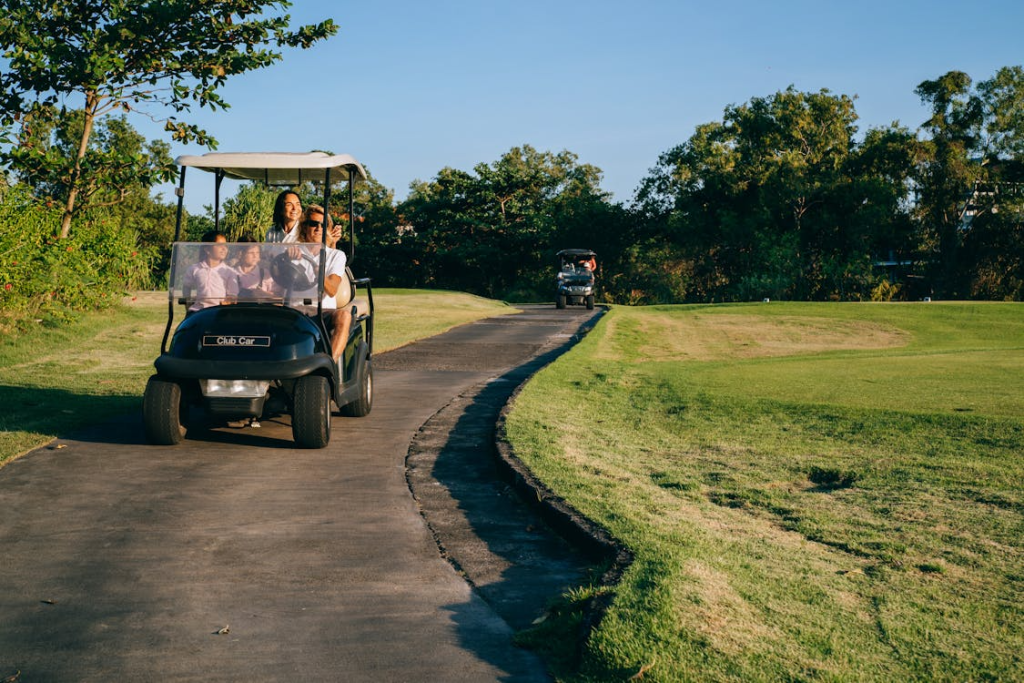
There are few better ways to experience Hawaii than behind the wheel of a golf cart the open air, the unhurried pace, the freedom to stop wherever something catches your attention. It’s one of the genuinely simple pleasures of island life, and for thousands of residents and visitors across Maui, the Big Island, and beyond, it’s become a natural part of how they move through the islands.
But like any vehicle on public roads, a street legal golf cart comes with real responsibilities. Golf carts are lighter, lower, and slower than conventional vehicles which means the consequences of an accident, a misjudgment, or an encounter with inattentive traffic can be significant. The same openness that makes cart travel enjoyable also means there’s less between you and the road than you’d have in a car.
The good news is that responsible golf cart operation isn’t complicated. It comes down to understanding the rules, knowing your vehicle’s capabilities and limits, and developing a few consistent habits that keep everyone on board and everyone around you safe. This guide covers everything Hawaii golf cart users need to know.
Understanding Hawaii’s Golf Cart Laws
Before anything else, it’s worth being clear about the legal framework that governs golf cart use on Hawaii’s public roads. Operating outside these rules isn’t just a safety issue it’s a legal one.
Key legal requirements for street legal golf carts in Hawaii:
- Road speed limits. Street legal golf carts classified as Low Speed Vehicles (LSVs) are permitted on public roads with posted speed limits of 35 mph or less. They are not permitted on roads with higher speed limits, highways, or interstates.
- Equipment requirements. To qualify as street legal, a golf cart must be equipped with headlights, tail lights, turn signals, mirrors, seat belts, and a horn. All street legal golf carts from 808 Golf Carts come equipped to meet these requirements.
- Driver licensing. Operating a street legal golf cart on public roads in Hawaii requires a valid driver’s license. This applies to residents and visitors alike.
- Registration and insurance. LSVs used on public roads in Hawaii must be registered and insured, similar to conventional vehicles. If you’re uncertain about your specific requirements, the Hawaii Department of Transportation is the authoritative resource.
- Age restrictions. Minors without a valid driver’s license should not operate a golf cart on public roads. On private property resort paths, golf courses, private estates local rules apply, but parental supervision is always appropriate for younger drivers.
Local rules can vary between islands and municipalities, and regulations evolve over time. When in doubt, checking with local authorities or the team at 808 Golf Carts is the right approach.
Speed: The Most Common Source of Golf Cart Accidents
Golf carts are not fast vehicles, but speed is still the most frequent contributing factor in golf cart accidents. The reasons are straightforward: carts have a higher center of gravity than cars, lighter frames, and less sophisticated suspension systems. At speeds that feel manageable, the consequences of a sharp turn, a sudden stop, or an unexpected obstacle can be more serious than drivers anticipate.
Speed safety practices:
- Operate well within the posted limit. Just because a road permits 35 mph doesn’t mean a golf cart should be driven at 35 mph in all conditions. Traffic density, road surface, visibility, and passenger load all affect what’s actually safe.
- Slow down significantly on turns. Golf carts tip more easily than cars, particularly when carrying passengers and making sharp directional changes at speed. Slowing before a turn not during it is the right habit.
- Reduce speed on wet roads. Hawaii’s roads go from dry to wet quickly, and wet pavement significantly reduces stopping distances and grip for golf cart tires.
- Slow for pedestrians well in advance. Resort paths, beachfront corridors, and tourist areas are pedestrian-heavy environments. Pedestrians don’t always see or hear carts approaching. Slowing early and giving wide berth is both courteous and safe.
- Downhill caution. Hawaii’s terrain includes meaningful hills in many areas. Descending grades at controlled speeds rather than letting the cart run prevents situations where braking capacity is overtaken by momentum.
Passenger Guidelines: Who Rides and How
One of the most common safety oversights with golf carts is treating passenger capacity and seating as informal. It isn’t the number and positioning of passengers directly affects vehicle stability, braking performance, and the safety of everyone on board.
Passenger safety rules:
- Never exceed the cart’s rated passenger capacity. A 4 person electric golf cart is designed and tested for four passengers. Overloading affects handling, braking, and structural integrity. The same applies to 6 seater and 8 seater electric golf carts capacity ratings exist for engineering reasons, not arbitrary ones.
- All passengers should be seated before moving. Starting or stopping with passengers standing, leaning out, or in the process of boarding is a leading cause of golf cart falls and injuries.
- Use seat belts. Street legal golf carts are equipped with seat belts for a reason. On public roads, they should be worn by all passengers not just the driver. In a collision or sudden stop, the absence of a seat belt is the difference between a minor incident and a serious injury.
- Keep limbs inside the cart. Arms, legs, and feet outside the cart’s frame are at risk from passing obstacles, other vehicles, and from the cart’s own movement. This is particularly important to communicate to children.
- Children should always be supervised. Young children should be seated between adults or in appropriately secured positions, not on the outer edges of bench seating.
- Distribute passenger weight evenly where possible. Uneven loading particularly side-to-side affects handling and increases tip risk on turns and uneven terrain.
Alcohol and Golf Carts: The Same Rules Apply
This is worth stating plainly because there is a persistent misconception that golf carts exist in a different legal or safety category than conventional vehicles when it comes to impaired driving. They don’t.
Operating a street legal golf cart on public roads in Hawaii while impaired by alcohol or drugs carries the same legal consequences as doing so in a car. DUI laws apply fully. Beyond the legal dimension, the handling characteristics of a golf cart lighter, less stable, and with less sophisticated safety systems than a car make impaired operation genuinely more dangerous, not less.
If you’ve been drinking, the cart stays parked. This isn’t a gray area.
Weather Awareness: Hawaii Isn’t Always Predictable
Hawaii’s weather is generally forgiving, but it isn’t always predictable particularly in certain areas and at certain times of year. Golf cart drivers should develop the habit of reading conditions before heading out and adjusting plans accordingly.
Weather-related safety practices:
- Check forecasts before longer rides. A ride that starts in sunshine can encounter rain within minutes in areas with variable microclimates. Knowing what’s likely coming helps with planning.
- Slow significantly in rain. Wet roads reduce grip and extend stopping distances. The appropriate speed adjustment in rain is more dramatic in a golf cart than in a car with modern stability systems.
- High winds deserve respect. Strong winds affect cart stability more than car stability, particularly for taller or wider cart configurations. In genuinely high wind conditions, postponing a ride is the right call.
- Avoid flooded roads. Hawaii’s heavy rain events can create temporary flooding on low-lying roads. Golf carts are not designed to operate through standing water, and the electrical systems in electric carts are particularly vulnerable to water ingress.
808 Golf Carts’ Safety Features Worth Knowing
All street legal golf carts from 808 Golf Carts come equipped with the safety features required for legal road operation in Hawaii headlights, tail lights, turn signals, mirrors, seat belts, and horns. But beyond the legal minimums, understanding your specific cart’s safety systems helps you use them effectively.
Features to familiarize yourself with:
- Braking system. Know how your cart’s brakes feel at normal stopping distances before you need them in an emergency situation. Early familiarity prevents the hesitation that comes with unfamiliar brake response.
- Speed limiter settings. Some Evolution models offer adjustable speed settings that can be configured for different use contexts useful for properties where younger or less experienced drivers will be operating the cart.
- Lights and signals. Test all lighting before any night or low-visibility operation. Knowing how your specific cart’s controls work without looking down at them is a small but meaningful safety detail.
For questions about specific safety features on any model from 2 seater golf carts to 8 seater configurations the team at 808 Golf Carts at 808-795-3800 can walk you through what’s on your specific cart and how to use it.
Teaching Others: New Drivers and Visitors
If you own a cart and are sharing it with visitors, family members, or employees who haven’t driven one before, a brief orientation before they head out is worth the ten minutes it takes.
What to cover with new drivers:
- How the braking system feels and responds
- Speed limits and road rules relevant to your area
- Passenger capacity limits and seat belt use
- How to handle hills both ascending and descending
- Where the lights and signals are and how to operate them
- Any specific local hazards particularly busy intersections, pedestrian crossings, or challenging road surfaces near your location
A new driver who’s been properly oriented is a safe driver. One who learns by trial and error on Hawaii’s public roads is a risk to themselves and others.
The Right Mindset Makes All the Difference
Golf cart safety ultimately comes down to mindset more than rules. Drivers who approach cart operation with genuine attentiveness who treat it as vehicle operation rather than casual recreation have better outcomes than those who treat safety as a formality.
Hawaii’s roads and paths are shared spaces. Residents, visitors, pedestrians, cyclists, and conventional vehicles all use them simultaneously. A golf cart driver who operates thoughtfully, predictably, and within their vehicle’s actual capabilities contributes to a safer environment for everyone and ensures that the experience of owning and using a cart in Hawaii stays exactly what it should be: one of the genuine pleasures of island life.
For anyone looking for a street legal golf cart in Hawaii that’s properly equipped, reliably built, and backed by a team that knows these islands and these vehicles, 808 Golf Carts is the starting point. Reach out at 808-795-3800 or browse the inventory online to find the right cart for your needs.
Frequently Asked Questions
Q: Do I need a driver’s license to operate a golf cart in Hawaii? A: Yes. Operating a street legal golf cart on public roads in Hawaii requires a valid driver’s license.
Q: What is the maximum speed for a golf cart on Hawaii roads? A: Street legal golf carts are classified as Low Speed Vehicles and are permitted on roads with posted speed limits of 35 mph or less.
Q: Are seat belts required in golf carts in Hawaii? A: Street legal golf carts are equipped with seat belts, and their use is strongly recommended for all passengers on public roads. Beyond the legal dimension, seat belts are the most effective single protection against injury in a collision or sudden stop.
Q: Can children ride in golf carts in Hawaii? A: Children can ride as passengers in golf carts, but should always be supervised, properly seated, and using seat belts where fitted.
Q: Is it legal to drive a golf cart at night in Hawaii? A: Yes, provided the cart is equipped with functioning headlights, tail lights, and turn signals which all street legal carts from 808 Golf Carts are.